In the bustling bazaars of Istanbul, amid the fragrant swirls of spice and sound, there exists a ritual as old as the Ottoman Empire itself. The preparation and consumption of Turkish coffee is not merely a caffeine delivery system but a ceremony steeped in tradition, a moment of pause in a rapidly modernizing world. What makes this practice particularly fascinating, however, is not just the thick, potent brew itself, but its second life as a tool for divination. The journey of the coffee grounds from the bottom of a cup to a map of the future represents one of the most intimate and poetic cultural symbol conversions, where a daily habit transforms into a portal for introspection and connection.
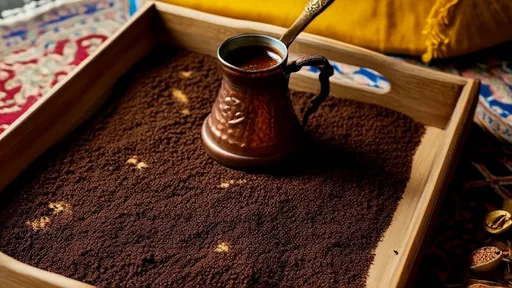
The story begins with the bean. Turkish coffee is unique in its preparation. Finely ground coffee, often to a powder-like consistency, is combined with water and sugar (if desired) in a special pot called a cezve or ibrik. It is brewed slowly over a heat source, never stirred once it begins to heat, and is served before the grounds have settled. This method results in a strong, unfiltered coffee with a layer of sludgy grounds at the bottom of the cup. The drinker consumes the liquid, leaving the sediment behind. But this is not the end. It is, in fact, the beginning of the next act.
Once the coffee is drunk, the ritual of tasseography—the art of reading patterns in tea leaves, wine sediments, or in this case, coffee grounds—can commence. The cup is turned upside down onto the saucer, often rotated three times for luck, and left to cool. This cooling period is crucial, as it allows the grounds to trickle down and create the patterns and shapes that will be interpreted. The act is traditionally performed by the host or an elder woman in the family, though professional readers also practice the art. It is a social activity, a moment of shared curiosity and often light-hearted fun, but it is also treated with a genuine sense of gravity and possibility.
The interpretation itself is a blend of established symbolism and intuitive artistry. Readers draw upon a common lexicon of symbols. For instance, a line might represent a journey, a ring could signify marriage or a commitment, and an animal might denote a characteristic or an encounter with a person born under that zodiac sign. However, the true skill of the reader lies not in a rigid dictionary but in their ability to weave these symbols into a narrative that resonates with the querent’s life. The grounds are read from the rim (representing the immediate present) to the bottom (the far future), and the saucer offers insights into the recent past. The resulting "reading" is less a fixed prediction and more a form of narrative therapy, offering a framework for the querent to reflect on their relationships, ambitions, and anxieties.
This transformation of coffee grounds from waste product to cultural cipher is deeply rooted in history. Coffee arrived in Istanbul in the 16th century, and the first coffeehouses quickly became vital centers of social and intellectual life. In the Ottoman court and in the home, coffee preparation was an esteemed skill. It was within these intimate, social settings that the practice of reading the grounds likely evolved. It provided a socially acceptable space, particularly for women, to discuss personal matters, hopes, and fears under the guise of a playful superstition. The grounds became a neutral medium through which difficult topics could be broached and advice could be offered indirectly.
In the modern era, the practice persists with a remarkable vitality. It has survived the onslaught of instant coffee pods and high-speed espresso machines. In Turkey, it is not uncommon for a business meeting to conclude with a coffee and a casual reading, or for a family gathering to feature a cup turned over for a grandmother to interpret. The ritual has also captured the global imagination, finding its way into cosmopolitan cafes from London to New York as a novel experience for tourists and coffee enthusiasts. This global interest has, in turn, sparked a new wave of cultural dialogue and adaptation, with new symbols being incorporated into the traditional lexicon to reflect contemporary concerns.
The enduring power of Turkish coffee fortune-telling lies in its dual nature. On one level, it is a tangible link to a rich historical and cultural past, a living artifact of Ottoman daily life. The specific tools—the cezve, the finely ground beans, the delicate cups—are all artifacts of that tradition. On another level, it is a profoundly human practice focused on connection and meaning-making. In a world increasingly dominated by digital screens and algorithmic predictions, the slow, analog, and deeply personal nature of reading coffee grounds offers a counterpoint. It demands presence. It requires the physical acts of brewing, drinking, and waiting. It creates a shared moment between the reader and the querent, a moment of face-to-face interaction and storytelling that is becoming ever more rare.
Ultimately, the journey of the Turkish coffee ground is a powerful metaphor for finding meaning in the mundane. It is a cultural alchemy that turns the dregs of a finished drink into a source of wonder. It demonstrates how objects and rituals can hold multiple layers of significance, shifting seamlessly from the functional to the mystical. The grounds are no longer just waste; they are a canvas. The cup is no longer just a vessel; it is a crystal ball. This transformation reminds us that culture is not static. It is a living, breathing process where even the most ordinary elements—like the leftover grounds in a coffee cup—can be imbued with extraordinary meaning, connecting the past to the present, the physical to the spiritual, and one person to another.

By /Aug 29, 2025
By /Aug 29, 2025

By /Aug 29, 2025

By /Aug 29, 2025
By /Aug 29, 2025
By /Aug 29, 2025
By /Aug 29, 2025
By /Aug 29, 2025

By /Aug 29, 2025

By /Aug 29, 2025
By /Aug 29, 2025
By /Aug 29, 2025
By /Aug 29, 2025
By /Aug 29, 2025
By /Aug 29, 2025
By /Aug 29, 2025

By /Aug 29, 2025

By /Aug 29, 2025

By /Aug 29, 2025
By /Aug 29, 2025
