In the hushed, steam-filled kitchens of Italy, a culinary debate simmers as intensely as the pasta water bubbling on every stovetop. The question of what truly constitutes perfect al dente pasta is far more than a matter of personal taste or cooking time; it is a profound cultural discourse that cuts to the very heart of Italian identity, revealing a deep and often unspoken divide between the country's north and south.
The term al dente itself, translating literally to "to the tooth," provides only the barest of guidelines. It suggests a pasta that offers a slight resistance when bitten, a firmness that is the antithesis of soft, overcooked noodles. Yet, within that simple definition lies a universe of interpretation. Ask a Milanese nonna and a Neapolitan chef to prepare spaghetti al dente, and you will be presented with two entirely different dishes, each cook utterly convinced of their own correctness. This divergence is not a modern invention for food blogs or television shows; it is a historical artifact, baked into the landscape and soul of the Italian peninsula over centuries.
To understand the northern interpretation is to understand its geography and economy. The North, the engine of Italy's industry and finance, is also the land of the Po Valley, rich with agriculture but with a climate and history distinct from the sun-drenched south. Here, particularly in regions like Emilia-Romagna and Lombardy, al dente tends toward a firmer, more pronounced bite. The pasta is often cooked for a minute or two less, resulting in a decidedly sturdy and resilient texture. This preference is frequently linked to the northern palate's affinity for heartier, richer dishes. Think of the dense, meaty ragù that clings to tagliatelle or the creamy, decadent sauces that coat fresh pasta. A softer noodle would disintegrate under the weight and complexity of such sauces, becoming a mushy, indistinct base. The firmness of northern al dente acts as a structural foundation, a canvas with enough texture to hold its own against powerful flavors.
There is also a subtle cultural undertone to this preference. The North's historical connections to Central Europe, its methodical precision, and its reputation for efficiency are often, perhaps stereotypically, reflected in its cuisine. The exact cooking time, the specific resistance, the predictable outcome—it speaks to a worldview that values control, order, and a clear definition of perfection. It is a texture that is achieved, not happened upon.
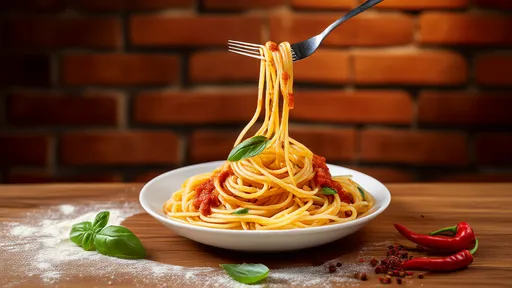
Journey south of Rome, and the definition of al dente undergoes a palpable shift. In the regions of Campania, Puglia, Sicily, and beyond, the pasta is typically allowed to cook a touch longer. The result is a toothsomeness that is present but softer, a gentler resistance that is more yielding than its northern counterpart. This is the land of vibrant, often simpler sauces based on the glorious triumvirate of the Mediterranean: tomatoes, olive oil, and garlic. A classic spaghetti aglio e olio or a fresh pomodoro sauce doesn't need to battle a rigid pasta for dominance; instead, the two are meant to meld together harmoniously. The slightly more tender pasta better absorbs the oil-based or light tomato sauces, creating a unified dish where pasta and sauce are inseparable partners.
This southern approach is deeply rooted in tradition and a different relationship with time and ingredients. The south's history is one of la dolce vita, of sun-soaked piazzas and a more relaxed pace of life. The cooking reflects this. It is intuitive, passed down through generations not with timers, but with senses—the smell of the wheat, the look of the pasta in the water, the feel of it between the fingers. The perfect al dente here is not about precision engineering but about feeling, about achieving a comforting harmony that speaks of family, warmth, and the abundant produce of the sun-drenched land.
The debate between these two schools of thought is rarely hostile, but it is deeply felt. For northerners, the southern style can border on overcooked, lacking the integrity and definition of true pasta. Southerners, in turn, might view the extreme firmness of northern pasta as undercooked, even unpalatable, a culinary reflection of a colder, more rigid demeanor. This divide is perpetuated in homes and restaurants across the country every single day. It is a debate had over family dinners, argued by chefs in kitchen prep rooms, and discussed by food critics attempting to pin down a national standard that simply does not exist.
Beyond the kitchen, the al dente standard is a powerful metaphor for the broader cultural and historical differences that have shaped Italy. The country's unification in the 19th century, known as the Risorgimento, politically merged a collection of disparate states, each with its own unique dialects, traditions, and customs. The north-south divide, economically and culturally, remains a potent force in Italian society. The pasta on the plate is a daily, edible reminder of this enduring diversity. It proves that Italy is not a monolith but a fascinating tapestry of regional identities that remain fiercely proud and distinct.
Attempts to codify an official standard, notably by the Italian National Union of Pasta Makers, have only served to highlight the impossibility of the task. Their guidelines suggest a precise window of cooking time, but this is a technical compromise that fails to capture the soul of the issue. It cannot account for the type of flour, the hardness of the water, the shape of the pasta, or, most importantly, the regional heritage of the person holding the wooden spoon. The true standard remains locked in place and palate.
Ultimately, the great al dente debate is a celebration rather than a conflict. It underscores the incredible richness of Italian food culture, where a single, simple ingredient like durum wheat semolina can be transformed into a language expressing a multitude of regional histories and identities. There is no single answer to what constitutes perfect al dente pasta because the answer depends entirely on where you are standing in Italy and, more importantly, whose nonna is doing the cooking. It is a beautiful testament to the fact that in Italy, food is never just fuel; it is history, identity, and love, all served up on a plate—firm or soft, to your own tooth's delight.

By /Aug 29, 2025

By /Aug 29, 2025

By /Aug 29, 2025

By /Aug 29, 2025

By /Aug 29, 2025

By /Aug 29, 2025

By /Aug 29, 2025

By /Aug 29, 2025

By /Aug 29, 2025

By /Aug 29, 2025
By /Aug 29, 2025
By /Aug 29, 2025
By /Aug 29, 2025

By /Aug 29, 2025
By /Aug 29, 2025
By /Aug 29, 2025
By /Aug 29, 2025

By /Aug 29, 2025
By /Aug 29, 2025

By /Aug 29, 2025
