In the rolling hills and ancient villages of France, a quiet revolution has been taking place for nearly a century—one that has forever changed how the world views, produces, and protects artisanal food. At the heart of this movement lies the Appellation d'Origine Contrôlée, or AOC, a system designed to safeguard the authenticity and heritage of regional products, with cheese standing as one of its most iconic beneficiaries. This framework is far more than a regulatory mechanism; it is a living testament to the profound connection between place, tradition, and taste, ensuring that the names of beloved fromages are not merely labels but promises of quality, origin, and cultural continuity.
The origins of the AOC system can be traced back to the early 20th century, a time when industrialization and mass production began to threaten the existence of traditional cheesemaking practices. Cheeses that had been crafted for generations in specific regions, using time-honored methods, were suddenly being imitated elsewhere, often with inferior ingredients and shortcuts that diluted their unique character. Farmers and artisans, recognizing that their livelihoods and cultural heritage were at risk, lobbied for legal protection. Their efforts culminated in the formal establishment of the AOC in 1935, with Roquefort becoming the first cheese to receive this distinguished status. This was not just a victory for cheesemakers; it was a declaration that certain foods are inextricably linked to their terroir—a French term encompassing the unique combination of soil, climate, and human expertise that gives a product its distinctive identity.
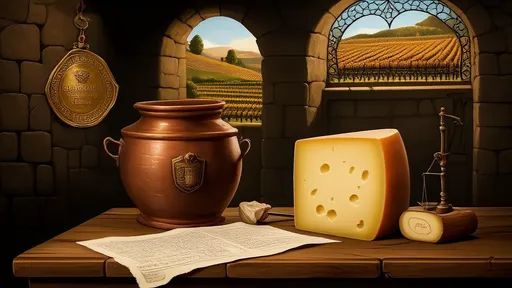
To earn the coveted AOC seal, a cheese must adhere to a rigorous set of specifications known as the cahier des charges. This document dictates every aspect of production, from the breed of animals and their feed to the exact methods of milking, curdling, aging, and even the geographic boundaries within which these activities must occur. For instance, Comté cheese can only be made from the milk of Montbéliarde or Simmental cows grazing in the delimited pastures of the Jura Massif. The milk must be transported to the cheese dairy within a strict time frame, and the aging process lasts a minimum of four months, though many are aged for over a year. These rules are not arbitrary; they are the cumulative wisdom of centuries, codified to preserve the sensory profile and historical integrity of each cheese. Any deviation, however minor, results in the loss of the AOC designation, reinforcing the system's unwavering commitment to authenticity.
Beyond the technicalities, the AOC system serves as a guardian of biodiversity and sustainable agricultural practices. By mandating the use of local, often heritage, animal breeds and prohibiting intensive farming techniques, it encourages environmental stewardship. The pastures of the Auvergne, where Salers cows roam freely, are not just sources of milk for Cantal cheese; they are vibrant ecosystems maintained through rotational grazing, which promotes soil health and carbon sequestration. This symbiotic relationship between cheesemaking and the land ensures that the production process benefits rather than depletes the natural world. In an era of climate change and ecological concern, the AOC model offers a blueprint for how food production can coexist harmoniously with nature, preserving both culinary traditions and the environment for future generations.
The impact of AOC extends into the economic realm, providing a lifeline for rural communities. Small-scale farmers and artisans, who might otherwise be unable to compete with industrial agribusiness, can command premium prices for their AOC-certified products. This economic viability helps reverse rural depopulation by creating stable jobs and fostering pride in local heritage. The town of Camembert in Normandy, for example, has seen a resurgence due to the fame of its namesake cheese, attracting tourists and supporting a network of affineurs, retailers, and restaurateurs. The AOC label acts as a mark of excellence that resonates with consumers globally, allowing these communities to thrive not in spite of their tradition, but because of it. It transforms cheese from a commodity into a story—one of place, people, and perseverance.
However, the system is not without its challenges and critics. Some argue that the strict regulations stifle innovation, locking producers into methods that may be outdated or inefficient. Others point to the high costs and bureaucratic hurdles involved in obtaining and maintaining AOC status, which can be prohibitive for very small operations. There is also an ongoing debate about the balance between protection and adaptation; as palates evolve and new technologies emerge, should the cahier des charges be updated, or does any change risk undermining the very tradition it aims to protect? These tensions highlight the delicate act of preserving the past while navigating the present, a challenge that the governing bodies of AOC continually grapple with through dialogue and periodic revisions.
In 1992, the influence of the AOC system reached beyond France's borders when the European Union adopted the concept under the Protected Designation of Origin (PDO) framework. This broader recognition means that cheeses like Italian Parmigiano-Reggiano and Greek Feta now enjoy similar protections, creating a pan-European standard for geographical indications. Yet, the French AOC remains the gold standard, the original model from which others derive inspiration. Its success has sparked conversations worldwide about the value of protecting regional foods, from Mexican mezcal to Japanese Kobe beef, demonstrating that the desire to safeguard culinary heritage is a universal impulse.
Ultimately, the story of AOC cheese is a story of respect—for the land, for history, and for the artisans whose skills turn milk into masterpiece. It is a system that understands that a cheese is more than the sum of its parts; it is a cultural artifact, a repository of memory and identity. When you slice into a wheel of Brie de Meaux or savor the crumble of a Bleu d'Auvergne, you are tasting not just a food, but a place and its people. You are participating in a chain of tradition that stretches back generations, a tradition that the AOC system vows to protect. In doing so, it ensures that these cheeses remain living, breathing expressions of French terroir, rather than relics of a bygone era. They are, in every sense, the taste of place, preserved for the future.

By /Aug 29, 2025

By /Aug 29, 2025

By /Aug 29, 2025

By /Aug 29, 2025

By /Aug 29, 2025

By /Aug 29, 2025

By /Aug 29, 2025

By /Aug 29, 2025

By /Aug 29, 2025

By /Aug 29, 2025
By /Aug 29, 2025

By /Aug 29, 2025
By /Aug 29, 2025

By /Aug 29, 2025

By /Aug 29, 2025
By /Aug 29, 2025

By /Aug 29, 2025

By /Aug 29, 2025

By /Aug 29, 2025

By /Aug 29, 2025
