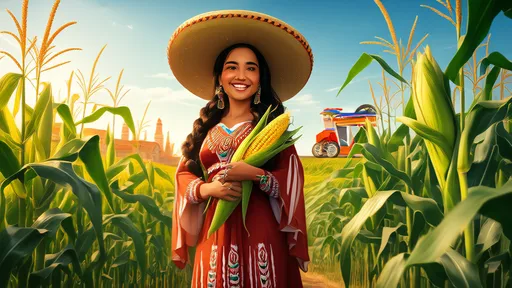
In the heart of Mexico’s cultural and spiritual identity lies a story as ancient as the land itself—the mythology of maize. For millennia, corn has been more than a staple crop; it has been a divine gift, a symbol of life, and the very essence of Mexican existence. From sacred creation myths to the sizzle of tacos on a bustling street corner, the journey of maize reflects the soul of a nation, weaving together threads of divinity, survival, and culinary artistry.
According to ancient Mesoamerican belief, maize was not merely discovered or cultivated by humans—it was bestowed upon them by the gods. In the Aztec tradition, the god Quetzalcoatl played a pivotal role in this divine narrative. Legend has it that before the existence of corn, the people subsisted on wild roots and game, living in hardship. Moved by their suffering, Quetzalcoatl embarked on a quest to retrieve maize, which was hidden behind a mountain guarded by deities. Transforming into a black ant, he infiltrated the mountain and stole a kernel of corn, bringing it back to humanity. This act of grace transformed society, enabling the rise of great civilizations like the Aztecs and Mayans, who built their empires around the cultivation of this sacred grain.
The Maya, too, held maize in profound reverence. In the Popol Vuh, the K’iche’ Maya creation myth, humans were fashioned from maize dough. The gods attempted to create beings from mud and wood, but these efforts failed. It was only when they used yellow and white maize mixed with water that the first true humans were formed—wise and grateful beings who honored their creators. Thus, maize became synonymous with human identity, a substance literally embodying the flesh and spirit of the people. This deep spiritual connection ensured that corn was central not only to diet but to rituals, calendars, and cosmology, shaping a worldview where agriculture and divinity were inseparable.
With the arrival of the Spanish conquistadors in the 16th century, the cultural landscape of Mexico underwent seismic shifts—yet maize endured. The Spaniards attempted to replace native crops with wheat, considering corn inferior, but they vastly underestimated its resilience and cultural entrenchment. Indigenous communities continued to cultivate and consume maize, preserving traditional methods such as nixtamalization—soaking and cooking kernels in an alkaline solution, which enhances nutritional value and flavor. This process, dating back to pre-Hispanic times, proved crucial in maintaining health and culinary continuity despite colonial pressures.
Over centuries, maize evolved from a sacred entity to a ubiquitous symbol of Mexican daily life. It became the foundation of the country’s cuisine, appearing in countless forms: tortillas, tamales, atole, and pozole, to name a few. Each region developed its own varieties and specialties, reflecting local climates, histories, and tastes. The tortilla, in particular, emerged as an enduring icon—a versatile staple eaten by rich and poor alike, served at humble family meals and elaborate feasts. Its preparation remained largely unchanged for generations, often handmade on comales (clay griddles), connecting modern Mexicans to their ancestral past with every bite.
In the 20th and 21st centuries, maize faced new challenges and transformations. Industrialization brought mechanized farming and processed foods, threatening heirloom corn varieties and traditional practices. Yet, simultaneously, a renewed appreciation for indigenous heritage and sustainable agriculture sparked movements to preserve native maize, championed by farmers, chefs, and activists. Figures like Ricardo Muñoz Zurita and Enrique Olvera elevated Mexican cuisine to global prominence, emphasizing the importance of ancestral ingredients and techniques. Maize, once a divine gift, now also became a banner for cultural resilience and gastronomic innovation.
Nowhere is the evolution of maize more vividly displayed than in the phenomenon of the street taco. Tacos represent the perfect fusion of ancient tradition and contemporary urban life. From the smoky pastor trompos spinning in Mexico City to the fresh seafood tacos of Baja California, each variety tells a story of adaptation and creativity. The taco is democratic food—quick, affordable, and endlessly customizable, yet deeply rooted in the corn-based tortilla that serves as its foundation. Street vendors often source masa from local mills, preserving the nixtamalization process, while experimenting with fillings that reflect global influences, from Middle Eastern spices to Asian marinades.
The cultural journey of maize—from mythic origin to taco shell—is a testament to its unbreakable bond with the Mexican people. It has survived conquest, globalization, and industrialization, continually adapting while retaining its symbolic power. Today, as chefs and home cooks alike rediscover heirloom corn and traditional methods, maize is experiencing a renaissance, celebrated not only as sustenance but as art and identity. It bridges the sacred and the everyday, the historical and the immediate, reminding us that some treasures, though humble in appearance, are truly eternal.
In Mexico, maize is more than food; it is memory, myth, and meaning served on a plate. Whether enjoyed in a quiet ritual offering or a lively street taco, it continues to nourish both body and soul, a golden thread connecting past, present, and future.

By /Aug 29, 2025

By /Aug 29, 2025

By /Aug 29, 2025

By /Aug 29, 2025

By /Aug 29, 2025

By /Aug 29, 2025

By /Aug 29, 2025

By /Aug 29, 2025

By /Aug 29, 2025

By /Aug 29, 2025
By /Aug 29, 2025
By /Aug 29, 2025
By /Aug 29, 2025
By /Aug 29, 2025
By /Aug 29, 2025
By /Aug 29, 2025
By /Aug 29, 2025
By /Aug 29, 2025
By /Aug 29, 2025
By /Aug 29, 2025
